Archive
Canada Launches Its Own Virtual Cash, Called MintChip
By Rebecca Boyle Posted 04.12.2012 at 11:02 am

Next time you visit Canada, you might use digital currency to purchase your poutine, using something called MintChip backed by the Canadian government. The Royal Canadian Mint announced it’s getting rid of the penny and starting a new e-currency instead, and it wants the software community to help develop it.
The government just launched the MintChip Challenge— which was apparently so popular it’s already fully registered — to seek new digital payment apps for this new virtual currency. The idea is sort of a hybrid, combining the convenience of electronic transactions and the anonymity of cash. It will work via SD cards, but it will have no personal information or bank account data associated with it. It’s sort of like BitCoin but with actual, government-backed value.
The four-month contest includes 500 developers who will build apps that can demonstrate MintChip’s value. They’ll have to work on a variety of smartphone and desktop browsers. The prize: Solid gold wafers and coins worth about $50,000.
Its anonymity is a pretty unique idea. Other electronic payment systems — PayPal, Square, NFC-enabled phones, etc. — all connect to a person’s credit card or bank account. But cash is a great equalizer; you don’t need to have good credit to use it. MintChip would enable the same type of low-cost transactions for which you’d normally use cash. A Canadian banking group called Interac estimates that small-value transactions under $20 are worth $90 billion to the Canadian economy, the Toronto Star reported.
MintChip still has some kinks to be ironed out, including privacy, security of the currency and other questions. But it’s certainly an interesting concept.
[via Slashdot]
Cassini Flies Right By Saturn’s Moon Enceladus, Snapping New Up-Close Pics

The Cassini spacecraft has been busy over this past week, making close flybys of both Enceladus and and Tethys, two of Saturn’s moons. And we’re not using “close” as a relative term here. Cassini skimmed Enceladus in such proximity that it was literally able to taste the plume of water ice, vapor, and other organic compounds spewing from the moon’s south polar region.
That flyby was at an altitude of just 46 miles above Enceladus’s surface, a hair’s breadth as these sorts of things go. Unfortunately for us, Baghdad Sulcus–the fracture from which said plume emanates–is in darkness for this flyover, but Cassini was able to snap various high-res surface shots of the moon as it passed back into daylight.

For its Tethys encounter, Cassini took a bit more conservative approach, passing about 5,700 miles above the moon’s surface. It was the first imaging expedition to Tethys since 2005, when Cassini captured imagery from its Saturn-facing side. This time Cassini snapped views of Tethys’s other side, which should provide researchers with enough data to start building decent digital elevation maps of Tethys’s surface.


[JPL]
Nanoparticle Coating Makes Paper Magnetic, Waterproof, and Antibacterial
By Rebecca Boyle Posted 04.18.2012 at 4:28 pm

Scientists at the Istituto Italiano di Tecnologia in Genoa, Italy, developed a process to cover any cellulose fiber, like paper or fabric, with a reactive coating. It involves combining the fiber molecules with a nanoparticle solution, creating a polymer matrix.
Cancer Industry Total Fraud Exposed: Nearly All ‘Scientific’ Studies Fail to be Replicated
Thursday, 19 April 2012 07:29

‘The vast majority of so-called scientific studies focused on cancer research are inaccurate and potentially fraudulent, suggests a new review published in the journal Nature. A shocking 88 percent of 53 “landmark” studies on cancer that have been published in reputable journals over the years cannot be reproduced, according to the review, which means that their conclusions are patently false.
C. Glenn Begley, a former head of global cancer research at drug giant Amgen and author of the review, was unable to replicate the findings of 47 of the 53 studies he examined. It appears as though researchers are simply fabricating findings that will garner attention and headlines rather than publishing what they actually discover, which helps them to maintain a steady stream of grant funding but deceives the public.’
Mysteriously dark Mars regions are made of glass
15 April 2012

Hearts of glass (Image: NASA/University of Arizona)
THEY look dark, but mysterious expanses on Mars are mainly made of glass forged in past volcanoes.
The dark regions make up more than 10 million square kilometres of the Martian northern lowlands, but their composition wasn’t clear. Past spectral measurements indicated that they are unlike dark regions found elsewhere on the Red Planet, which consist mainly of basalt.
Briony Horgan and Jim Bell of Arizona State University in Tempe analysed near-infrared spectra of the regions, gathered by the Mars Express orbiter. They found absorption bands characteristic of the iron in volcanic glass, a shiny substance similar to obsidian that forms when magma cools too fast for its minerals to crystallise (Geology, DOI: 10.1130/G32755.1).
The glass likely takes the form of sand-sized grains, as it does in glass-rich fields in Iceland. The spectra suggest the grains are coated with silica-rich “rinds”.
On Earth, such rinds coat volcanic glass weathered by water. How the glassy grains formed on Mars is unknown, but Horgan says magma from Martian volcanoes interacting with water ice and snow is a possibility. That would make these regions (pictured right) potential hotspots for alien life because they would have held chemical-rich water – a key ingredient for life.
A Visual Tour of the Fuel Pools of Fukushima
Do You Know What the Fuel Pools Actually Look Like?
You already know that Fukushima’s fuel pool number 4 may be the single greatest threat, but that pool number 3 is very dangerous as well.
You’ve heard that unit 3′s fuel pool contains less radioactive material than unit 4 … but still a tremendous amount of radiation. Scientific American reported last year:
The pools at each reactor are thought to have contained the following amounts of spent fuel, according to The Mainichi Daily News:
• Reactor No. 1: 50 tons of nuclear fuel
• Reactor No. 2: 81 tons
• Reactor No. 3: 88 tons
• Reactor No. 4: 135 tons
• Reactor No. 5: 142 tons
• Reactor No. 6: 151 tons
• Also, a separate ground-level fuel pool contains 1,097 tons of fuel; and some 70 tons of nuclear materials are kept on the grounds in dry storage.
You’ve learned that unit 3′s reactor was the only one at Fukushima which burned plutonium. As Japan Times notes:
Reactor 3 … uses highly dangerous mixed oxide fuel, Tokyo Electric has reported.
***
No. 3 reactor is the only one at the crippled power station that was powered by the plutonium-uranium MOX
You’ve gotten the fact that – if the water drains out for any reason – it will cause a fire in the fuel rods, as the zirconium metal jacket on the outside of the fuel rods could very well catch fire within hours or days after being exposed to air. See this, this, this and this. (And that even a large solar flare could knock out the water-circulation systemsfor the pools.)
You’ve listened to experts say that – unless the rods are removed from the fuel pools before a major earthquake strikes (using special equipment which keeps the rods submerged in water the whole time) – they will likely catch fire and release huge amounts of radioactivity. See this and this – starting at 4 minutes into the video.
You’ve read that – after reviewing photos from several different angles – the Nuclear Regulatory Commission’s initial impressions were that spent fuel pool number 3 might not be there at all, and that nuclear engineer Arnie Gundersen said a couple of days ago:
Unit 3 is worse [than No. 4]. It’s mechanically its rubble, the pool is rubble. It’s got less fuel in it. It faces the same problem. Structurally the pool has been dramatically weakened. And, god nobody has even gotten near it yet.
And you may caught the recent headline that a 35-ton machine fell into spent fuel pool 3. As Kyodo News reports:
The operator of the crippled Fukushima Daiichi nuclear power plant on Friday found that a 35-ton machine had dropped inside the spent fuel pool of the No. 3 unit, possibly because of a hydrogen explosion that occurred in the early stage of plant’s nuclear accident last year.
Tokyo Electric Power Co., commonly known as TEPCO, reported the finding after placing a camera inside the water-filled pool the same day to prepare for removing, as part of the decommissioning process, the nuclear fuel stored there.
One photo showed part of the machine, originally located above the pool and used to insert and remove fuel, appeared to have dropped onto the nuclear fuel storage racks.
But – until you see pictures – it is hard to get a sense of what all this means.
Here’s a picture just released by Tepco of the giant machine in the fuel pool :

And another new Tepco photo showing other tangled wreckage inside the pool:

The following graphics from Ashai news show how the crane is normally used to move spent fuel rods in and out of the pool. Here’s the crane bringing in a special container to hold the rods:
Loading spent fuel rods into the container:
The crane then lifts the rod-carrying container up:
And then away from the pool:
Keep in mind that the machine which fell into pool number 3 was part of the crane “used to insert and remove fuel”, and so now there is no easy way to remove the fuel from the fuel pool. And the crane at unit 4 is also broken:
Still confused?
Let’s look at some more pictures …
Before the Quake
Here is where the fuel pools are located in the Fukushima reactors:

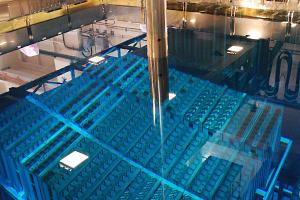
Here are pictures Unit 3′s fuel pool before the earthquake, and the fuel pool crane:


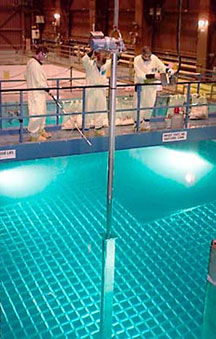

This shot is during repairs at reactor 4 before the earthquake – but gives a sense of scale:

After the Quake
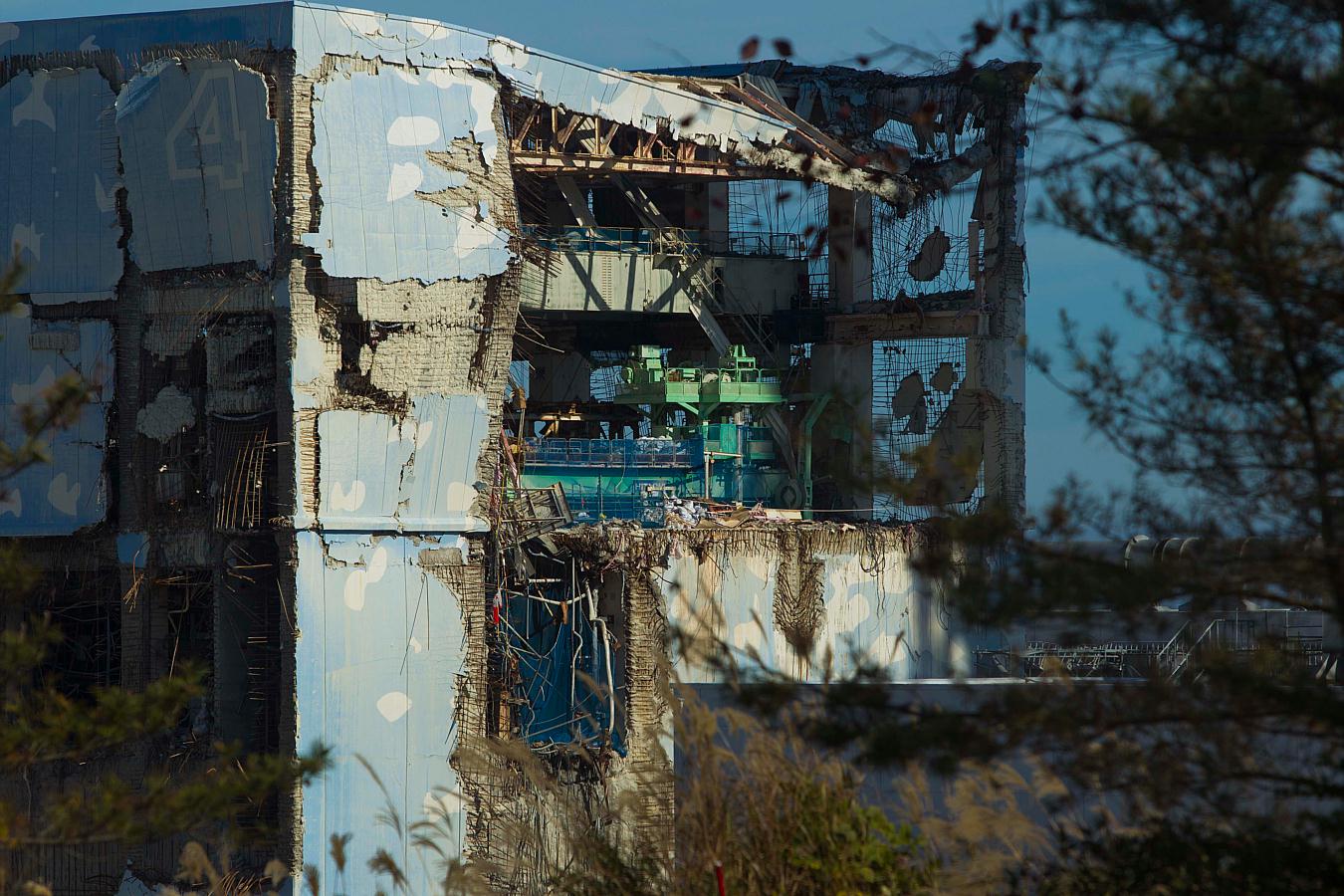
Here is the green fuel pool crane at unit 4 after the earthquake:



The view from above the crane at fuel pool 4:


(“SFP” in these photos refers to the spent fuel pool.)
Former fuel pool nuclear engineer Arnie Gundersen notes that – for at least some period after the earthquake – the fuel pool had insufficient water, and the nuclear rods were sticking out into the air:
Here is water later being poured into fuel pool 4:
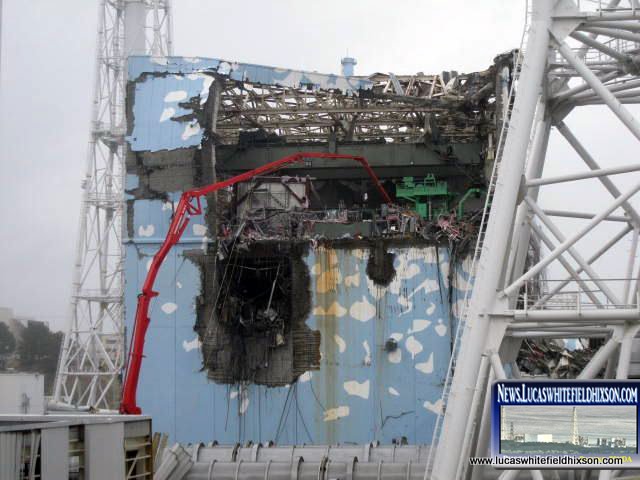
Reactor 3 is a mess:


HouseofOust notes of this picture:
Oval is the reactor well location. Lines on the left side of the image outline the crane that seems to have fallen over or been crushed. Spent fuel pool outlined in the foreground.

And of this picture:
Perspective lines are drawn to show where the deck should be and how much is gone. A circle shows the beam apex to appoximate the reactor well. Spent fuel pool is again seen off to the right and outlined. Marked structure in the foreground is the end of the refueling crane.

Now can you see what’s going on?
Penguins, Polar Bears, Glaciers, Arctic Ice All Thriving
Tuesday, 17 April 2012 09:58

‘Even as climate alarmists amplify their call for a worldwide tax on carbon dioxide emissions in the name of preventing global warming – penguins, polar bears, Himalayan glaciers and Arctic sea ice are all thriving.
With dire proclamations of ice free Arctic summers vehemently debunked, the latest data indicates that both wildlife and the environment in earth’s coldest regions has not experienced the catastrophic devastation predicted as a result of man-made climate change.’
Read more: Penguins, Polar Bears, Glaciers, Arctic Ice All Thriving
http://www.sciencedaily.com/releases/2012/04/120413145303.htm
http://www.theregister.co.uk/2012/04/11/bering_sea_ice_cover/
Prostate Cancer Vaccine Contains Genetically Modified DNA
Monday, 16 April 2012 09:10

‘The treatment, which uses viruses carrying human DNA to direct the body’s natural defences against cancer cells, is the first prostate cancer vaccine ever to reach late stage “phase three” trials in Europe.
No vaccines have yet been approved in Britain to treat any type of cancer, and scientists believe it could not only double the survival rate of prostate cancer sufferers but give way to a new range of similar treatments for other tumour types.’
Read more: Prostate Cancer Vaccine Contains Genetically Modified DNA
Top Scientist: Fluoride Already Shown to Cause 10,000 Cancer Deaths
16th April 2012
By Anthony Gucciardi
Contributing Writer for Wake Up World
Water fluoridation is a highly controversial topic, with many individuals voicing massive concern over the practice. In contrast, some stick to the concept that there isn’t any association between fluoride and any real negative effects. Fluoride, however, is indeed a toxic substance, and has been tied with numerous health complications in well-established research. Fluoride can be found in many water supplies, toothpaste, and even food at alarming levels. While it may sound shocking to many, some research is even drawing a close connection between fluoride and an increased cancer risk.
One paper entitled Fluoride – A Modern Toxic Waste says the following:
“Yiamouyiannis documents research showing that fluoride increases the tumor growth rate by 25% at only 1 ppm, produces melanotic tumors, transforms normal cells into cancer cells and increases the carcinogenesis of other chemicals. For the original references to these studies, refer to Yiamouyiannis’ pamphlet, Lifesavers Guide to Fluoridation“
In 1997, it was shown that fluoridation caused about 10,000 cancer deaths in epidemiological studies by Dr. Dean Burk, former head of the Cytochemistry Section at the National Cancer Institute and Yiamouyiannis. Despite the findings occurring in 1997, they were not reluctantly released until 1989. After analyzing the study results in rats, it was found that animals who drank fluoridated water:
Showed an increase in tumors and cancers in oral squamous cells.
Developed a rare form of bone cancer called osteosarcoma.
Showed an increased in thyroid follicular cell tumors.
Developed a rare form of liver cancer known as hepatocholangiocarcinoma.
http://www.youtube.com/watch?feature…&v=ClqK7XvfLg0
Other research resurfaced by Dr. Dean Burk, former chief of cytochemistry at the National Cancer Institute for 30 years, also shows that fluoride increases the cancer death rate. Dr Burk refers to a study conducted which compares the 10 largest U.S. cities with fluoridation and the 10 largest without. What researchers found was that following fluoridation, deaths from cancer went up immediately- in as little as a year.
To reduce fluoride levels to a the greatest degree, activists must demand that the government stop fluoridating the water supplies. Water fluoridation has not only been linked to an increased cancer risk, but a decreased IQ in children. In fact, the findings forced the government to call for lower fluoridation levels nationwide. Until water fluoridation comes to a halt, the easiest way to reduce fluoride exposure is to invest in a reverse osmosis water filtration system. Drinking distilled water for 3-6 months may also reduce the soft tissue fluoride levels, but not bone levels. Soft tissue fluoride levels cause the greatest health problems.
First Phobos, now Mars too has a monolith.
By Natalie Wolchover | LiveScience.com – Wed, Apr 11, 2012
http://news.yahoo.com/monolith-object-mars-could-call-214004772.html
discuss at: http://forum.davidicke.com/showthread.php?t=206925

Amateur stargazers have discovered an intriguing object jutting out from the surface of Mars. The seemingly perfectly rectangular, upright structure, found in NASA images of the Red Planet, bears a striking resemblance to the monoliths planted on Earth and the moon by aliens in the classic sci-fi film “2001: A Space Odyssey.”
The object in question was first spotted several years ago after being photographed by the HiRISE camera onboard the Mars Reconnaissance Orbiter, a NASA space probe; every so often, it garners renewed interest on the Internet. But is it unnatural — a beacon erected by aliens for mysterious reasons, and even more mysteriously paralleled in the imaginations of Stanley Kubrick and Arthur C. Clarke, creators of “2001”? Or is this rock the work of nature?
According to Jonathon Hill, a research technician and mission planner at the Mars Space Flight Facility at Arizona State University, who processes many of the images taken during NASA’s Mars missions, the object in question is no more than a roughly rectangular boulder.
The HiRISE camera that photographed it has a resolution of approximately 1 foot (30 centimeters) per pixel — impressive considering the 180-mile (300-kilometer) altitude from which it photographs the Martian surface, but not quite sharp enough to capture the cragginess of a mid-size boulder. “When your resolution is too low to fully resolve an object, it tends to look rectangular because the pixels in the image are squares. Any curve will look like a series of straight lines if you reduce your resolution enough,” Hill told Life’s Little Mysteries.
The location of the boulder at the bottom of a cliff near many other boulders suggests it broke off the cliff and tumbled to its current spot sometime in the distant past, Hill said. Such a perilous location is itself an argument against deliberate placement by aliens: “If I was going to build a monolith somewhere, that’s the last place I would put it!” he said. “The debris falling from the cliff would cover it up pretty quickly, on geologic timescales.”
Hill added that the height of the boulder is being exaggerated in the photo by a low sun angle. Photographed when the sun was near the horizon, the boulder casts an especially long shadow.
The ufologists aren’t necessarily wrong in calling it a monolith — the word simply translates from Latin as “one stone.” But this monolith isn’t the masonry of Martians.


 Believe nothing